

Drink Driving Advice from Specialist Solicitors
“Sleeping it off” is one of the biggest misconceptions in drink driving law.
At MAJ Law, we regularly speak to drivers who are genuinely shocked to find themselves over the legal limit the morning after drinking. Many say the same thing:
“I felt completely fine.”
But in drink driving cases, how you feel is irrelevant. What matters is the alcohol level in your system at the time you were driving.
How Long Does Alcohol Stay in Your System?
One of the most dangerous assumptions drivers make is believing there’s a clear-cut timeframe after which it’s safe to drive. In reality, alcohol processing is slow, variable, and unpredictable.
-
Alcohol typically takes up to one hour to be fully absorbed into your bloodstream
-
After that, your body removes it at an average rate of:
-
1 unit per hour
-
Approximately 7 microgrammes per hour (breath alcohol)
-
However, this is only a rough guide, not a rule.
Why the “1 Unit Per Hour” Rule Can Be Misleading
This estimate does not account for real-life variables. In practice, your body may process alcohol more slowly depending on:
-
Body composition and metabolism
-
Gender and hormonal differences
-
Food intake (or lack of it)
-
Fatigue and sleep
-
Medication or underlying health conditions
-
Strength and quantity of alcohol consumed
👉 This means two people drinking the same amount could have very different readings the next morning.
The chart below is not intended to help you work out how much you can ‘get away’ with drinking before driving. It is intended simply to give you some understanding of alcohol elimination rates and timings of alcohol absorption. You may be surprised by the results.
If you plan on driving – don’t drink. Leave the car at home and make alternative arrangements. That is the safest and most reliable advice!
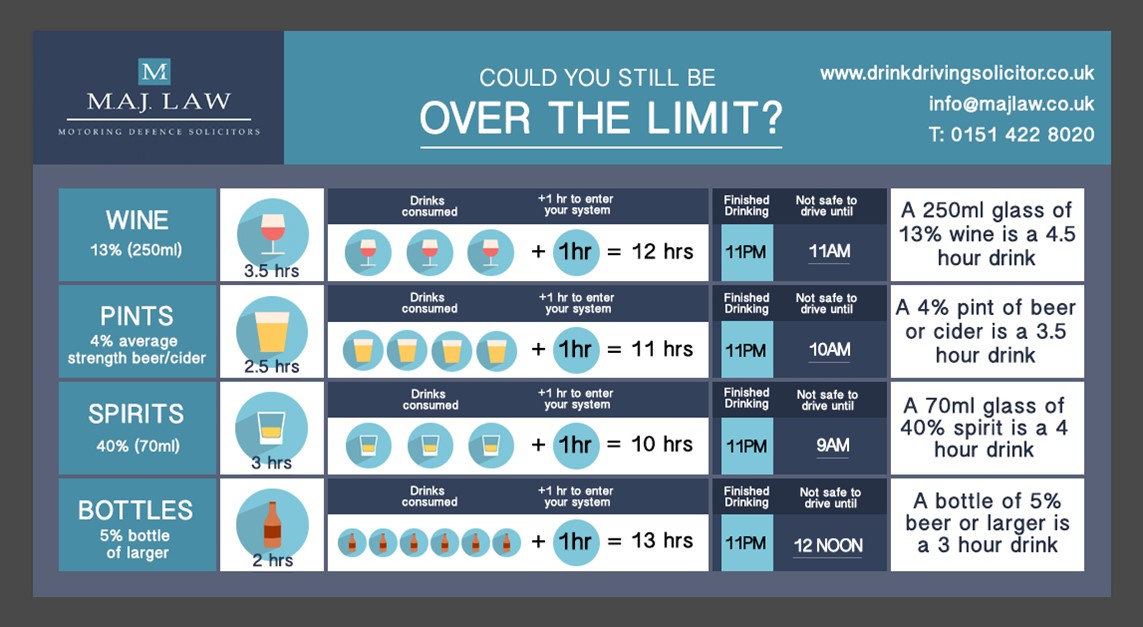
The Morning After Risk: Why You Could Still Be Over the Limit
The “morning after” scenario is one of the most common situations we deal with.
Here’s why it happens:
1. Alcohol Continues Absorbing While You Sleep
If you drink late into the evening, your body may still be absorbing alcohol overnight, meaning your levels can remain high into the morning.
2. Your Body Hasn’t Finished Processing It
Even after several hours of sleep, your system may not have eliminated all the alcohol; especially after heavy or prolonged drinking.
3. You Feel Fine - But Aren’t Legally Safe
Alcohol can impair your ability to judge your own level of intoxication. Many drivers feel normal, alert, and capable - but still produce readings over the legal limit.
⚠️ This is where many people are caught out.
What Is the Drink Driving Limit in England and Wales?
The legal limits are:
-
35 microgrammes of alcohol per 100 millilitres of breath
-
80 milligrammes per 100 millilitres of blood
-
107 milligrammes per 100 millilitres of urine
While these limits may appear relatively high compared to other countries, they are still low enough to catch drivers who feel completely sober. In fact, many European countries operate on a stricter 50mg blood alcohol limit, highlighting how close UK drivers often are to exceeding the threshold.
Why “Feeling Fine” Doesn’t Mean You’re Safe to Drive
The drink driving limit is not set at the point someone appears drunk. It is set at the point where driving ability becomes impaired.
Even small amounts of alcohol can affect:
-
Reaction time
-
Concentration
-
Coordination
-
Vision and perception
-
Decision-making
These changes are often subtle; which is why drivers underestimate the risk.
How Drivers Get Caught the Morning After
In many cases, drivers are stopped for unrelated reasons:
-
A routine police stop
-
A minor traffic issue
-
An ANPR check
Once stopped, officers may:
-
Detect alcohol on the breath
-
Carry out a roadside breath test
-
Require an evidential sample at the police station
👉 At that point, even a marginal reading over the limit can lead to a charge.
Is Drink Driving Always a Straightforward Case?
No- and this is where expert legal advice becomes critical.
At MAJ Law, we frequently identify issues that can form the basis of a drink driving defence, including:
-
Failures in police procedure
-
Incorrect administration of roadside or station tests
-
Issues with breathalyser calibration and maintenance records
-
Timing discrepancies between driving and testing
-
Lack of continuity in evidence
In some cases, these issues can significantly weaken the prosecution’s case.
💡 One of the biggest mistakes drivers make is assuming there is no defence and pleading guilty too early.
What Should You Do If You’re Accused of Drink Driving?
If you are stopped or charged:
-
Do not assume the case is proven
-
Avoid making unnecessary admissions
-
Seek specialist legal advice immediately
The earlier you obtain advice, the more opportunities there may be to challenge the evidence and protect your licence.
Practical Tips to Avoid the Risk
If you plan to drive:
-
✔️ The safest option is not to drink at all
-
✔️ Plan ahead with a designated driver
-
✔️ Use taxis, lifts, or public transport
-
✔️ Be especially cautious about driving the morning after
-
✔️ Consider alcohol-free alternatives
-
✔️ Personal breathalysers can help; but are not always reliable
Why Early Legal Advice Matters
Drink driving offences carry serious consequences, including:
-
A minimum 12-month driving disqualification
-
Potential fines or community orders
-
Increased insurance premiums
-
A lasting impact on employment and travel
But every case turns on its facts—and not all cases are as straightforward as they appear.
Final Thought
The “morning after” is one of the biggest traps in drink driving law.
If you’re questioning whether you might still be over the limit; there’s a real possibility that you are.
When it comes to drink driving:
👉 Guessing is risky
👉 Assumptions are dangerous
👉 And early advice can make all the difference
Speak to a Specialist Drink Driving Solicitor
At MAJ Law, we specialise exclusively in motoring offences. We understand the technical detail behind drink driving cases and how to identify potential defences that others may overlook.
If you’re facing an allegation or simply want clarity on your situation:
📞 Call our team today for immediate advice