
Motoring Law FAQs
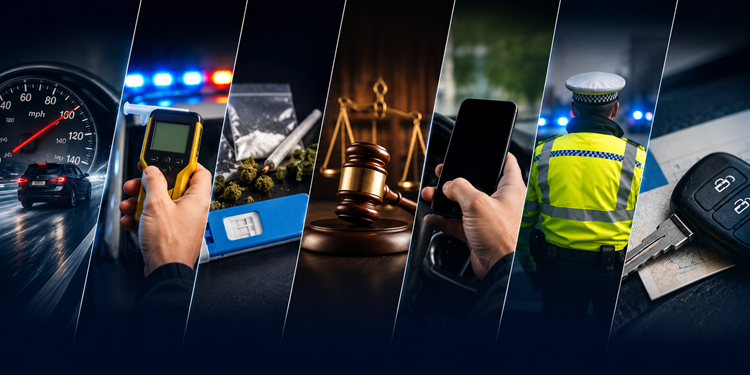
If you're facing a motoring offence, it's completely natural to have questions. Whether you've been accused of drink driving, drug driving, speeding, dangerous driving or another road traffic offence, understanding the legal process can often feel overwhelming.
We've created this Motoring Law FAQs page to provide quick, straightforward answers to the questions our specialist solicitors are asked most often. Think of it as your starting point - a place where you can quickly find the information you're looking for before exploring our more detailed guides and resources.
Simply select a category below to browse the most frequently asked questions. If you'd like more in-depth advice on a particular topic, you'll find links throughout the page to our dedicated guides, where we explore each area of motoring law in greater detail.
If you can't find the answer you're looking for, or you'd like advice specific to your circumstances, our specialist motoring solicitors are here to help.
🚗 Drink Driving FAQs
Being arrested or charged with drink driving can be a stressful experience, and it's natural to have questions about what happens next. Below, we've answered some of the most common questions we receive. For more detailed guidance, simply click through to our dedicated drink driving guides.
What is the legal drink driving limit?
In England and Wales, the legal alcohol limits are 35 micrograms of alcohol per 100ml of breath, 80mg per 100ml of blood, and 107mg per 100ml of urine. However, every case is different, and a reading over the limit does not necessarily mean there are no legal issues to consider.
👉 Try our drink driving limit calculator here.
Can I drive the morning after drinking?
Yes - but only if you are below the legal alcohol limit. Many motorists are surprised to discover they can still be over the limit the morning after a night of drinking, even if they feel completely sober.
👉 Read our guide to morning-after drink driving.
What happens if I fail a roadside breath test?
A positive roadside breath test will usually result in your arrest and you'll be taken to a police station for an evidential breath test. It is the police station result, not the roadside reading, that is generally relied upon in court.
👉 Find out what happens if youve been charged with drink driving here
Will I automatically lose my licence?
A conviction for drink driving usually results in a mandatory driving disqualification, although the length of the ban depends on the circumstances of your case.
👉 Learn more about drink driving sentecing guidelines here
💊 Drug Driving FAQs
Drug driving investigations often involve complex legal procedures and scientific evidence. Below are answers to some of the questions we're asked most frequently. For more detailed information, visit our dedicated drug driving guides.
What happens if I fail a roadside drug test?
A positive roadside DrugWipe does not automatically mean you'll be convicted. It is a screening test, and in most cases you'll be taken to a police station where an evidential blood sample will be obtained.
👉 Scroll down on this blog for more information on roadside drug tests.
Can I be prosecuted for prescribed medication?
Yes, although there may be a statutory medical defence if you've taken your medication as prescribed and your driving was not impaired.
👉 Read here for information on prescription medication and drug driving.
Will I lose my licence?
If you're convicted of drug driving, you'll normally receive a minimum 12-month driving disqualification. The court may impose a longer ban depending on the circumstances of the offence, and you'll also receive a criminal conviction. If you rely on your licence for work or family commitments, it's important to seek specialist legal advice as early as possible.
🚔 Speeding FAQs
Whether you've received a Notice of Intended Prosecution, a Fixed Penalty Notice or a court summons, understanding your options is important. Here are the questions we're asked most often about speeding offences.
Will I be offered a Speed Awareness Course?
Possibly. Eligibility depends on the speed involved, your previous driving history and the policy of the police force dealing with your case.
How many points will I get?
Most lower-level speeding offences result in three penalty points, although more serious offences can lead to a higher number of points or an immediate driving ban.
Can I challenge a speeding ticket?
Yes. Depending on the circumstances, it may be possible to challenge the allegation or the evidence relied upon by the prosecution.
👉 For more details on speeding - see here
⚠️ Dangerous Driving FAQs
Dangerous driving is one of the most serious motoring offences in England and Wales. Below you'll find answers to the questions we hear most often from motorists facing investigation or prosecution.
Will I go to prison?
Not necessarily. While imprisonment is available for dangerous driving, the sentence will depend on the seriousness of the offence and the individual circumstances.
👉 Read our guide to dangerous driving sentencing here
What's the difference between dangerous and careless driving?
Careless driving is where your driving falls below the standard expected of a competent and careful driver. Dangerous driving is more serious and applies where your driving falls far below that standard.
For example, briefly losing concentration may amount to careless driving, whereas street racing or dangerously overtaking another vehicle is more likely to be considered dangerous driving.
Will I lose my licence?
Yes. Dangerous driving carries a mandatory driving disqualification, and you'll usually need to pass an extended driving test before your licence is returned.
👉 For all information on dangerous driving - see here
📱 Mobile Phone Offence FAQs
The law surrounding mobile phone use while driving has changed significantly in recent years. Below are quick answers to the questions we receive most often.
Can I use my phone at traffic lights?
No. If you're holding and using your phone while stopped at traffic lights, you may still commit an offence.
Can I use my phone in a cradle?
Yes, provided you are not holding the phone and remain in proper control of your vehicle. However, becoming distracted could still result in another offence.
Can I use Apple CarPlay or Android Auto?
Yes. These systems can generally be used lawfully provided your phone is not handheld and you remain focused on the road.
👉 For all information on mobile phone use - see here
Still Have a Question?
We hope these FAQs have helped answer some of your questions about motoring law. However, every case is different, and the information provided here is intended as general guidance only. If you're under investigation, have been charged with a motoring offence, or need advice tailored to your circumstances, it's always best to speak to a specialist solicitor.
Our experienced motoring defence solicitors advise clients across England and Wales on a wide range of road traffic offences. If you'd like to discuss your case, get in touch with MAJ Law today for confidential, expert advice.