
How We Spotted the Error: Charged with Drink Driving… Without Driving
The Situation
This was one of those cases where something didn’t quite sit right from the outset.
A young client came to us facing a drink driving charge, based on a borderline blood reading. On paper, it looked like a fairly typical case - the kind many would assume was straightforward. But when we spoke to him, his account immediately suggested otherwise.
He explained that he’d been on a night out and had returned to a car park with friends. He had his keys on him, but he wasn’t driving. Instead, he was stood outside the vehicle, talking with a friend and arranging a lift home, with the plan to collect his car the following day.
The Allegation
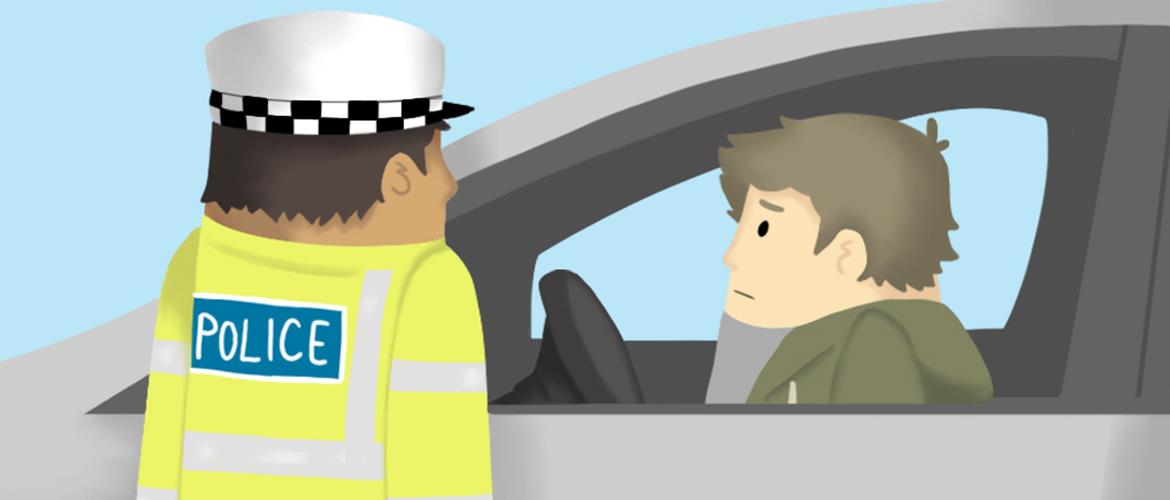
Despite this, police attended the scene and an officer claimed they had seen him in the vehicle. That account ultimately formed the basis of the charge.
However, from a legal perspective, that raised an immediate issue; because for a charge of driving with excess alcohol, the prosecution must prove that the individual was actually driving or attempting to drive.
Being near a vehicle, even with keys, is not enough on its own.
What Didn’t Add Up
The key question for us was simple: where is the evidence of driving?
At that stage, the case appeared to rely heavily on the officer’s account. But where there is a dispute, that account must be supported by evidence, particularly where more objective material may be available.
We therefore pushed for full disclosure, including any CCTV from the car park.
What We Found
When the CCTV footage was obtained and reviewed, it told a very different story.
There was no evidence of driving, no attempt to drive, and nothing to support the allegation that our client had been in the vehicle in the way suggested. In fact, the footage directly contradicted the officer’s account.
At that point, the case had a clear and fundamental flaw.
The Legal Issue
The prosecution were pursuing a charge that required proof of driving, but the available evidence simply didn’t support it. Even when considering alternative offences, such as being in charge of a vehicle or driving whilst unfit, there would still need to be evidence of intention or likelihood of driving.
In this case, the circumstances pointed the other way. Our client had arranged a lift home and had no intention of using his vehicle that night.
Combined with a borderline reading, the case became increasingly difficult to justify.
The Outcome
Once these issues were properly raised, the prosecution reviewed the position and the case was dropped before trial.
Our client avoided a driving ban, penalty points, and a criminal conviction.
Why This Matters
Cases like this highlight how important it is to look beyond the surface.
It’s easy to assume that once an allegation has been made, the outcome is inevitable. But the law requires each element of an offence to be proven, and where it isn’t, the case cannot succeed.
Here, the issue wasn’t just the evidence itself, but the fact the wrong charge had been pursued in the first place.
The Takeaway
Being near a vehicle with keys does not automatically mean you were driving. And an allegation, even from an officer, must still be supported by evidence.
This is why early legal advice matters. Because sometimes, the difference between a conviction and no case at all comes down to spotting what others have missed.