

Imagine being arrested for a drink-driving-related offence when you haven't even driven your car. It might sound ridiculous, but under UK law, it's entirely possible.
Most motorists are well aware of the consequences of drink driving. Getting behind the wheel while over the legal alcohol limit can result in a driving ban, a substantial fine, a criminal conviction and even imprisonment. However, what many people don't realise is that you don't necessarily have to drive your vehicle to find yourself facing criminal proceedings. In fact, you could potentially be prosecuted simply for being in charge of a vehicle while over the prescribed alcohol limit, even if the car hasn't moved an inch.
Under the Road Traffic Act 1988, being drunk in charge of a motor vehicle is a separate criminal offence from drink driving. It's an important distinction because the prosecution does not need to establish that you actually drove, or even attempted to drive, the vehicle. This can lead to some surprising situations, particularly where motorists have deliberately chosen not to drive after consuming alcohol.
So, could you really be arrested for sleeping in your car after a night out? What happens if the police find you sitting in a parked vehicle while over the limit? And, perhaps most importantly, can you defend an allegation of being drunk in charge?
What Does Being Drunk in Charge of a Vehicle Actually Mean?
Under Section 5(1)(b) of the Road Traffic Act 1988, it is an offence to be in charge of a motor vehicle on a road or other public place while the proportion of alcohol in your breath, blood or urine exceeds the prescribed legal limit. Unlike a conventional drink-driving offence, which requires the prosecution to prove that someone was driving or attempting to drive, an allegation of being drunk in charge can arise even when the vehicle is completely stationary.
The difficulty is that the legislation does not provide a simple, definitive explanation of what being 'in charge' actually means. Instead, the courts consider the individual circumstances surrounding each case, including the person's relationship with the vehicle, their ability to exercise control over it and what they were doing at the relevant time. Someone sitting in the driver's seat with their keys in the ignition may clearly raise questions about whether they were in charge, but the situation can become more complicated when a person is asleep in the back seat or has no immediate intention of going anywhere.
Importantly, being the registered keeper or owner of a vehicle does not automatically mean that someone was legally in charge of it at a particular moment. Equally, the fact that the engine was switched off or the vehicle was parked does not necessarily prevent a prosecution. The circumstances must be examined as a whole, and the prosecution must establish the relevant elements of the offence beyond reasonable doubt.
Can You Be Arrested for Sleeping Drunk in Your Car?
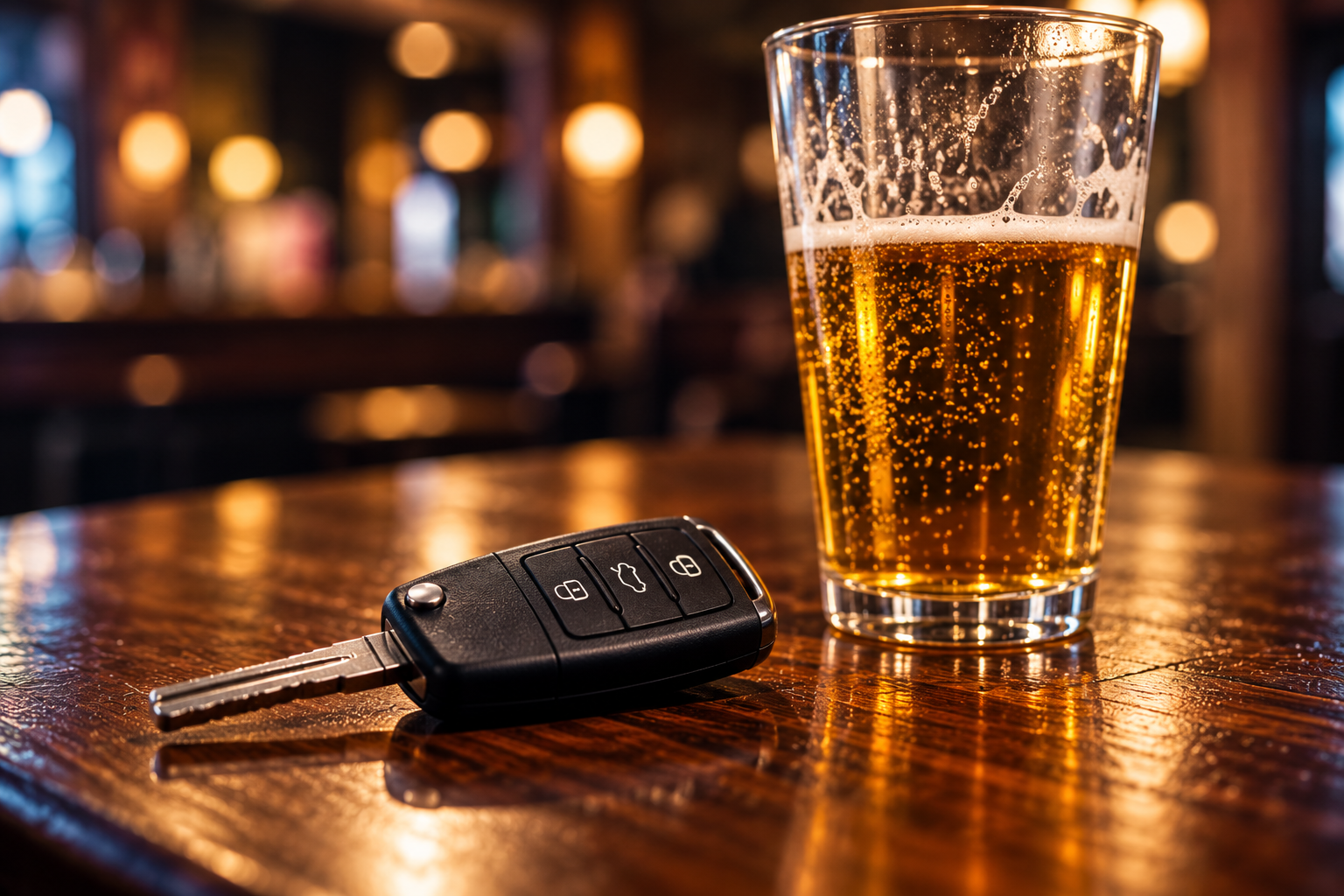
Imagine you've been out for the evening, had several drinks and realised that you're in no fit state to drive home. Rather than take the risk, you decide to do what seems like the responsible thing and sleep in your car until you're sober. You recline the seat, switch off the engine and settle down for the night, fully intending to drive home the following morning. However, if the police discover you asleep in the vehicle and establish that you're over the prescribed alcohol limit, you could potentially find yourself being investigated for being drunk in charge.
This might seem particularly unfair when you've deliberately chosen not to drive, but the law is concerned with more than whether the vehicle was actually moving. The police may consider where you were sitting, whether you had access to the keys, whether the engine was running, where the vehicle was parked and whether there was any likelihood of you driving while still over the limit. None of these factors is necessarily decisive on its own, but together they can help establish the circumstances surrounding the allegation.
For example, someone who is asleep in the back of their car, with bedding prepared and clear arrangements to remain there until sober, may have evidence supporting a statutory defence. That situation could be very different from someone sitting behind the steering wheel with the engine running, although neither scenario automatically determines guilt or innocence.
Crucially, the law does recognise that a person may be in charge of a vehicle while over the limit without there being any likelihood of them driving it in that condition. This distinction forms the basis of an important statutory defence, which can be particularly relevant in cases involving motorists who have chosen to sleep in their vehicles.
Can You Be Drunk in Charge If Your Engine Is Switched Off?
One of the most common misconceptions surrounding this offence is that you cannot get into trouble if your engine is switched off. Unfortunately, this isn't necessarily the case. The offence of being drunk in charge does not require the engine to be running, the keys to be in the ignition or the vehicle to have moved. A person can potentially be considered in charge of a stationary vehicle, depending on the circumstances.
For instance, someone who has been drinking and is sitting in their parked car with the keys in their possession may still be considered to have control over the vehicle. However, simply having access to the keys does not automatically establish that an offence has been committed, and the court must consider the wider evidence. The question of whether someone was in charge is also separate from whether they can establish that there was no likelihood of driving while over the prescribed alcohol limit.
Similarly, the location of the vehicle can be significant. The Road Traffic Act 1988 applies to roads and other public places, which means an allegation of being drunk in charge is not necessarily restricted to public highways. Depending on the circumstances, supermarket car parks, pub car parks and other areas accessible to the public may fall within the scope of the legislation. However, a privately owned car park is not automatically a public place simply because vehicles can enter it, and the precise nature of the location may be relevant when examining the prosecution's case.
Is There a Defence to Being Drunk in Charge of a Vehicle?
Yes, and this is arguably the most important aspect of the law surrounding this offence.
Under Section 5(2) of the Road Traffic Act 1988, a person accused of being drunk in charge has a statutory defence if they can prove that, at the time of the alleged offence, the circumstances were such that there was no likelihood of them driving the vehicle while their alcohol level remained likely to exceed the prescribed limit. In other words, even if the prosecution establishes that you were over the legal alcohol limit and in charge of the vehicle, it does not necessarily follow that you will be convicted.
Consider someone who has been drinking and decides to sleep in their car overnight rather than drive home. They have made arrangements to remain in the vehicle until the following afternoon, when they expect their alcohol level to have fallen below the legal limit. If there is credible evidence supporting those arrangements, it may help establish that there was no likelihood of them driving while over the limit. However, simply telling the police that you had no intention of driving may not, by itself, be sufficient to establish the defence.
The court will consider the available evidence, including the person's actions, the circumstances surrounding the vehicle and any information that helps establish when they were likely to become legally fit to drive. Unlike the elements of the offence, which the prosecution must prove beyond reasonable doubt, the burden of establishing this particular statutory defence rests with the defendant, on the balance of probabilities.
This is one of the reasons why specialist legal advice can be particularly valuable. An experienced motoring solicitor can assess the circumstances, identify potentially relevant evidence and advise whether the statutory defence may be available.
How Can You Prove You Weren't Going to Drive?
Establishing that there was no likelihood of driving while over the legal alcohol limit will often depend on the evidence available. For example, if you had arranged to sleep in your vehicle overnight, messages confirming those plans, evidence of your sleeping arrangements or witnesses who knew that you intended to remain parked could all potentially support your account. The location of the vehicle, whether the engine was running and where the keys were kept may also be relevant, although none of these factors guarantees a successful defence.
Another important consideration is the amount of alcohol in your system and how long it was likely to take for your alcohol concentration to fall below the prescribed limit. In some cases, expert toxicological evidence may assist the court in understanding the likely elimination of alcohol from the body and whether the person's account of their intended departure time is consistent with the available scientific evidence.
The distinction here is important. The statutory defence is not simply about proving that you did not intend to drive immediately. It concerns whether there was any likelihood of you driving while your alcohol level remained likely to exceed the legal limit. For example, someone who intended to drive after only a short period of sleep could face difficulties establishing the defence if the evidence suggested they would still have been over the limit at that time.
Every case is different, which is why the precise circumstances and available evidence should be carefully examined before any conclusions are reached.
What Is the Punishment for Being Drunk in Charge?
Although being drunk in charge is a separate offence from drink driving, a conviction can still have serious consequences. In England and Wales, the maximum penalty for being in charge of a motor vehicle while over the prescribed alcohol limit is three months' imprisonment, a fine of up to £2,500 or both. The court also has the power to impose a driving disqualification, depending on the seriousness of the offence and the circumstances of the case.
One important difference between drink driving and being drunk in charge is that a conviction for driving or attempting to drive while over the prescribed limit ordinarily carries a mandatory minimum 12-month driving disqualification. By contrast, disqualification for being drunk in charge is discretionary. Where the court does not impose a driving ban, the offence carries 10 penalty points, which can have significant implications for motorists who already have endorsements on their licence.
For drivers who have accumulated other penalty points within the relevant three-year period, a further 10 points could also result in disqualification under the totting-up provisions. Beyond the immediate penalties, a criminal conviction can affect employment, particularly for individuals whose jobs depend on their ability to drive, and may have implications for insurance premiums and future driving opportunities.
The potential consequences make it particularly important not to assume that a drunk-in-charge allegation is a minor matter simply because no actual driving took place.
Can You Challenge a Drunk-in-Charge Allegation?
Being arrested or charged with being drunk in charge does not automatically mean that you will be convicted. As with any criminal allegation, the prosecution must prove the necessary elements of the offence, and there may be several aspects of the case that warrant closer examination.
One of the first questions is whether the prosecution can establish that you were actually in charge of the vehicle. This may involve considering where you were positioned, whether you had control over the vehicle and the circumstances surrounding your presence. The location of the vehicle may also be relevant, particularly where there is a question about whether it was on a road or other public place within the meaning of the legislation.
The alcohol evidence itself may require examination. Depending on the circumstances, a solicitor may investigate how breath, blood or urine specimens were obtained, whether the relevant procedures were followed and whether there are any evidential issues capable of affecting the prosecution's case. Not every procedural irregularity will provide a defence, but material weaknesses in the evidence can sometimes be significant.
Perhaps most importantly, a specialist motoring solicitor can consider whether the statutory defence under Section 5(2) applies. Where a person had genuinely made arrangements not to drive until their alcohol level fell below the prescribed limit, evidence supporting those arrangements may be crucial. This could involve witness statements, communications, CCTV footage or expert evidence concerning alcohol elimination.
The outcome of any case will depend on its individual facts, and a successful defence cannot be guaranteed. However, the existence of a statutory defence means that being over the limit while in charge of a vehicle does not necessarily result in a conviction.
What Should You Do If You've Been Charged with Being Drunk in Charge?
If you've been arrested or charged with being drunk in charge of a motor vehicle, it's important to seek specialist legal advice as early as possible. The circumstances surrounding the allegation, the evidence obtained by the police and any arrangements you had made to avoid driving may all be relevant to your defence.
You should also consider preserving any potentially useful evidence, including text messages, receipts, booking confirmations or details of witnesses who can support your account of what happened. Evidence can become more difficult to obtain as time passes, particularly where CCTV recordings or other time-sensitive information may be involved.
Most importantly, don't assume that a conviction is inevitable simply because a breathalyser indicated that you were over the prescribed alcohol limit. Being drunk in charge is a distinct criminal offence, and the law specifically provides a defence where there was no likelihood of driving while over the limit. Understanding that distinction, and obtaining advice about how it applies to your circumstances, can be an important first step.
Facing a Drunk-in-Charge Allegation? Speak to MAJ Law
At MAJ Law, we specialise in defending motorists facing criminal motoring allegations, including drink driving and being drunk in charge of a motor vehicle. We understand that these cases are not always straightforward and that the circumstances surrounding an allegation can be just as important as the alcohol reading itself.
Our specialist motoring solicitors can carefully examine the prosecution's evidence, identify potential weaknesses and advise you on any available defences. Whether you were sleeping in your vehicle, sitting in a parked car or have been accused of being in charge in other circumstances, obtaining the right legal advice can help you understand your position and the options available.
If you've been accused of being drunk in charge of a vehicle, don't assume that you have no defence. Contact MAJ Law today for specialist legal advice about your case.