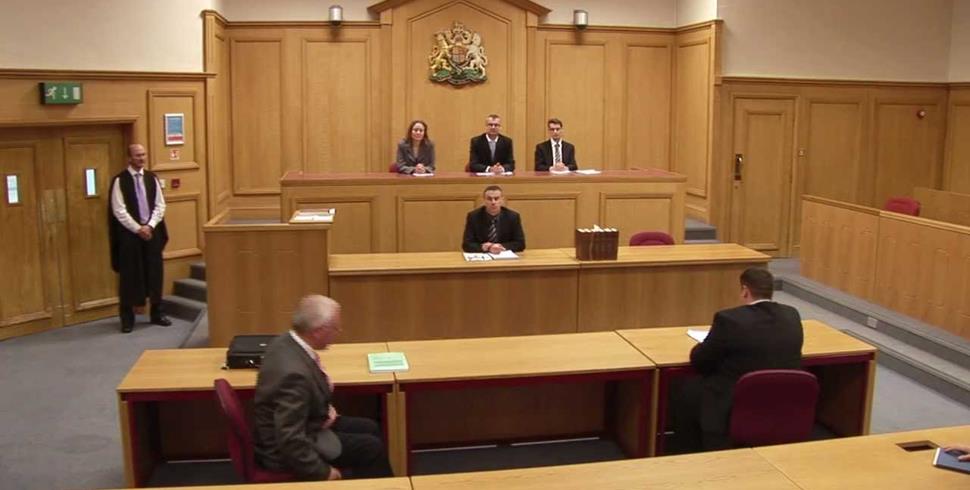

Most drivers assume a speeding ticket means a £100 fine and three penalty points, which, for many, is exactly what happens.
But the minimum penalty is only the starting point.
What happens to your driving licence depends on how fast you were going, what’s already on your record, and the choices you make in the 28 days after the notice comes through your door.
This guide covers speeding offences in England and Wales, explaining how speeding penalties are set, what each deadline means and when it pays to get advice before you accept anything.
M.A.J. Law is the UK’s leading motoring defence firm, and our speeding solicitors deal with these cases every day.
What counts as a speeding offence?
A speeding offence happens when you drive above the legal speed limit for the road you're on.
A 30mph limit usually applies in built-up areas, but 20mph zones are increasingly common.
Speed limits vary by road type and vehicle. On smart motorways they can be lowered temporarily for congestion or hazards, which often catches drivers out.
And despite what your friends might tell you about police allowing “10% plus 2” before you're technically speeding, that's just National Police Chiefs’ Council (NPCC) guidance on when officers usually take action.
It's not the law, and police can prosecute below it.
Driving too fast for the conditions can also be an offence, like careless driving (driving without due care and attention), even when you’re within the speed limit.
How can you be caught speeding?
How you were caught decides what happens next, including whether police stopped you and warned you about prosecution at the roadside. You'll usually be caught speeding by:
Fixed speed cameras: Rear-facing and forward-facing cameras like Gatso and Truvelo.
Average speed cameras: These time you between two points, often through roadworks.
Mobile camera vans: An operator inside uses a laser or radar device.
Handheld laser devices: Laser speed guns are aimed at your vehicle by an officer at the roadside.
Smart motorway cameras: These enforce variable limits shown on overhead gantries.
Speed on green cameras: These catch drivers speeding through a junction even when the light is green.
Police follow-check: An officer follows your vehicle and records your speed with a calibrated device.
If you were stopped, you may have received a verbal warning that you could be prosecuted. That warning can stand in for a written notice.
What are the speeding penalty bands?
Speeding fines and points are set by the Sentencing Council’s guideline, which puts your offence in Band A, B or C depending how far over the limit you were.
Bands aren’t a fixed number of mph over the limit. At 30mph, Band A starts at 31, but at 70mph it runs all the way to 90.
|
Speed limit (mph) |
Band A |
Band B |
Band C |
|
20 |
21–30 |
31–40 |
41 and above |
|
30 |
31–40 |
41–50 |
51 and above |
|
40 |
41–55 |
56–65 |
66 and above |
|
50 |
51–65 |
66–75 |
76 and above |
|
60 |
61–80 |
81–90 |
91 and above |
|
70 |
71–90 |
91–100 |
101 and above |
|
Band |
Points or ban |
Fine (% of relevant weekly income) |
|
A |
3 points |
25–75% (starting point 50%) |
|
B |
4–6 points, or a 7–28 day ban |
75–125% (starting point 100%) |
|
C |
6 points, or a 7–56 day ban |
125–175% (starting point 150%) |
Your fine is based on your relevant weekly income, not monthly income and courts can go above or below these ranges.
Factors like poor weather, heavy traffic or carrying passengers make your sentence more serious, whereas having a clean record counts in your favour.
The maximum fine you could face is £1,000 (or £2,500 if the offence happened on a motorway).
A court can impose points or a ban, but not both.
Here’s how the bands work:
33 in a 30: is technically Band A, but falls below the NPCC threshold, so it's unlikely you'd be prosecuted (but you still could be).
40 in a 30, or 80 in a 70: both are Band A. If you’re offered a fixed penalty notice, it’s usually £100 and 3 points.
45 in a 30: this is Band B, which means 4-6 points or a ban up to 28 days.
Over 100mph on a motorway: this is Band C and it's likely you'd be banned.
Speeding convictions are recorded with SP endorsement codes. SP30 covers speeding on a public road, where SP50 covers motorways. Both carry 3 to 6 points, so neither code is “worse” on points alone. But the motorway offence carries the higher maximum fine.
What happens after you’re caught speeding?
Everything runs on fixed deadlines, so missing one can create a new offence on top of the original speeding.
Notice of intended prosecution (NIP), within 14 days
If you weren’t stopped at the time, police must send you a notice of intended prosecution (NIP) within 14 days of the alleged offence. Company, hire and lease cars are more complicated, because the keeper has to pass the notice on. A late NIP may give you a defence, but doesn’t automatically end your case.
Section 172 notice, 28 days to respond
The NIP usually comes with a notice under section 172 of the Road Traffic Act 1988, which requires the keeper to name the driver at the time. You have 28 days to respond. Naming yourself isn’t an admission of guilt.
Failing to name the driver
Failing to identify the driver is a separate offence carrying six penalty points and up to a £1,000 fine. That’s often more than the speeding penalty.
The police decide what to offer
Your options are usually a speed awareness course, a conditional offer of fixed penalty (£100 and 3 points, to accept within 28 days), or a referral to court.
Court paperwork
If no offer is made, or you don’t accept one, you’ll receive a single justice procedure notice or a summons for court. You must respond to a single justice procedure notice within 21 days. If you don’t, your case can go ahead without you.
Received a notice of intended prosecution and not sure what to do? Call 0151 422 8020 for free advice before your deadline passes.
Can you take a speed awareness course instead?
Many drivers caught speeding are offered a speed awareness course from the police, but this isn't a right and not everyone is offered it.
Where it’s available, accepting it is usually sensible. You pay a course fee instead of a fine and you don't get any points on your licence.
Speed awareness courses are typically offered for lower speeds, roughly in line with NPCC guidance, for example 35 to 42mph in a 30 or 79 to 86mph in a 70.
You can only attend one course in any three-year period.
Some insurers ask whether you’ve attended a course, so answer honestly if you’re asked.
When do you have to go to court?
Most speeding fines are dealt with by post, but a case can go to Magistrates’ Court if:
- Your speed was so over the limit it makes a ban an option
- You plead not guilty
- New points would take you to 12 or more
- You aren’t eligible for a fixed penalty, for example because you already have points
Many cases start with a single justice procedure notice, where a magistrate deals with your case.
If you face disqualification, you’ll be asked to attend.
A not guilty plea lets the evidence be tested, but if you’re found guilty after a trial you may face a higher penalty than the original offer.
Find out more about going to court for speeding, including when you can avoid attending.
How long do speeding points stay on your licence?
Speeding points count towards a ban for three years from the date of the offence, but they stay on your DVLA record for four years.
You can check your record with the DVLA’s online licence checker using your driving licence details.
Getting 12 points or more within three years means a “totting-up” ban of at least six months, which is longer if you’ve been disqualified before.
You could argue exceptional hardship to avoid a ban, but that's a high bar and you need evidence to support any claims.
New drivers face stricter rules.
Six or more points within two years of passing your test means your licence is revoked and you’ll have to retake your test.
You must declare points to your insurer. If you don’t, your policy could be void.
If you think points were added wrongly, for example after a conviction you didn’t know about, there are legal routes to reopen or appeal the case.
Thinking of pleading guilty?
Our Case Studies take a look a real cases involving real people. You may also be interested in reading about court hearings in the Magistrates' Court and Sentencing Guidelines. You can also view our case studies page for more information.
A Summary of Recent Cases – Marcus A Johnstone
How to win the 'unwinnable' cases...
Drink Driving – Your First Court Hearing
This booklet discusses a drink driving first court hearing - Is a solicitor necessary?
Will you go to prison?
This booklet looks at the Magistrates' Court Sentencing Guidelines for drink driving
When should you get advice before accepting a speeding penalty?
For a first Band A offence, accepting the fixed penalty or the course is often reasonable. For some drivers, though, accepting is costly.
Get advice before you pay if:
- You already have six or more points
- You’re a new driver in your first two years
- You were caught at a Band B or Band C speed
- You’ve received a court summons or a single justice procedure notice
- A ban would cost you your job
- The car is a company or lease vehicle and the NIP arrived late
- You genuinely don’t know who was driving
Accepting a penalty means you never see the evidence.
A specialist can check whether the device, the paperwork and the deadlines stand up, and our guide to speeding loopholes explains what we look for.
No defence is guaranteed, but you can’t challenge evidence you haven’t seen.
Speak to a specialist today
Your next deadline is probably closer than you think. You have 28 days to name the driver, 28 days to accept a conditional offer and 21 days to respond to a single justice procedure notice.
Check the date on your paperwork now.
M.A.J. Law fights for motorists across England and Wales, from the first call to the final verdict. Your first conversation with our speeding solicitors is free, with no obligation.
Call 0151 422 8020 or request a free callback today.
0151 422 8020
Useful Links;
Related Articles


MAJ Law
26 February 2026Case Study: Speeding Allegation Dropped Due to Police Enforcement Issue

MAJ Law
13 April 2026Speeding Offences Explained: What Drivers Still Get Wrong About Speed Cameras

MAJ Law
26 February 2026Speed on Green Cameras Explained: Can You Be Fined for Speeding Through a Green Light?